 React Native
 Expo
 NestJS
 PostgreSQL
 Prisma
The problem
Picture a salon owner pricing a haircut. The number usually comes from gut feeling or from what the shop down the street charges. Once the stylist's time, the rent and the electricity are counted, some services quietly lose money, and the owner has no way to see which. A spreadsheet could answer it, but most owners will never build one.
Meridian does that maths for them. For the app, that meant turning a price, the roles involved with their hourly rates and time, direct costs and a share of overhead into a true cost, a margin and a profit per hour for every service, and working it all out again the moment any input changes.
My role
I built the mobile app end to end: sign-in, onboarding, the five-step service builder, the dashboard, the AI insights screens, the paywall and the store releases. I also set up the backend's foundation: NestJS with Clerk for sign-in, a verified webhook that keeps users in sync, and Prisma. Our backend engineer built the profitability engine and the AI pipeline on top of it.
How it works
What people use
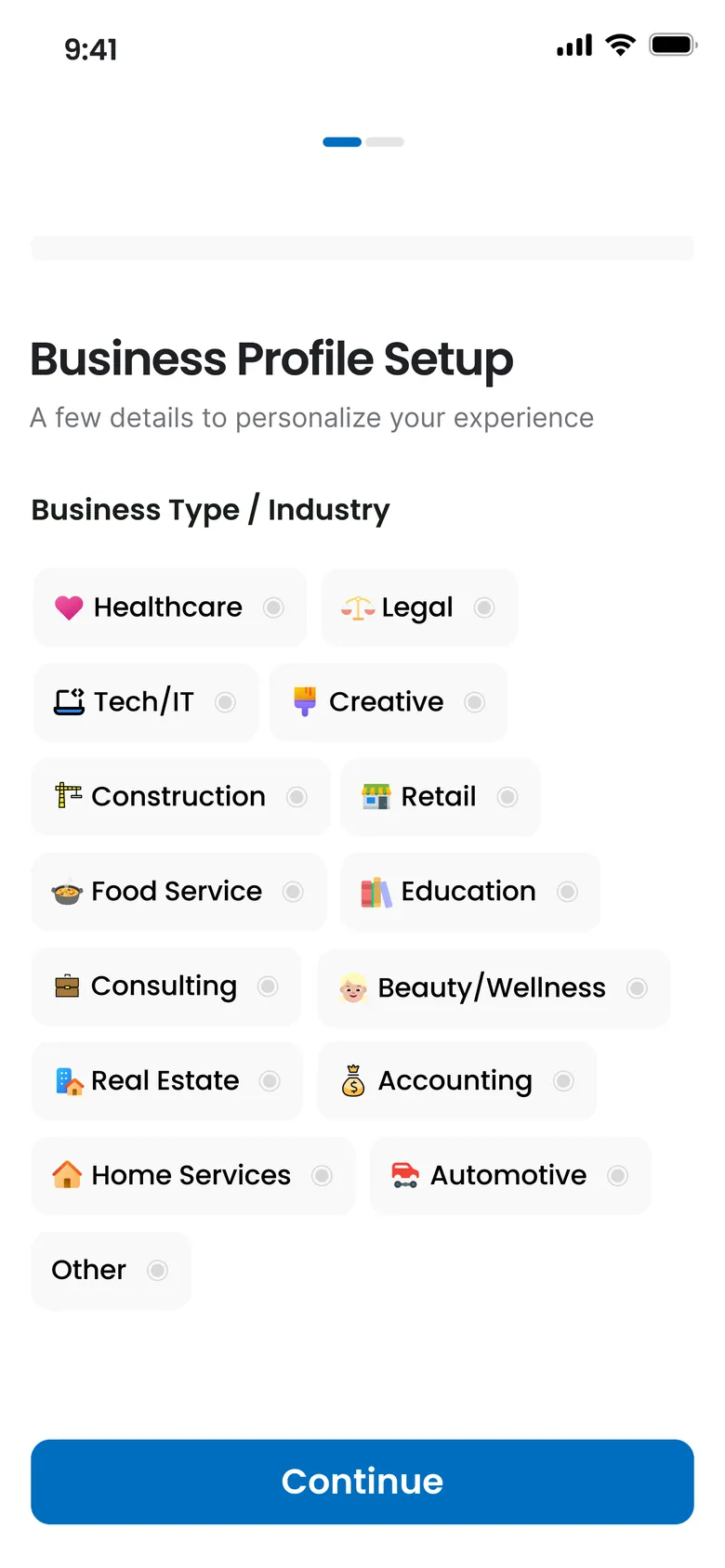
- Onboarding starts from an industry preset with suggested roles. Overhead goes in as one total or category by category.
- Services are priced per hour, per job or per month, with a fixed time or a range, and the roles and direct costs they use.
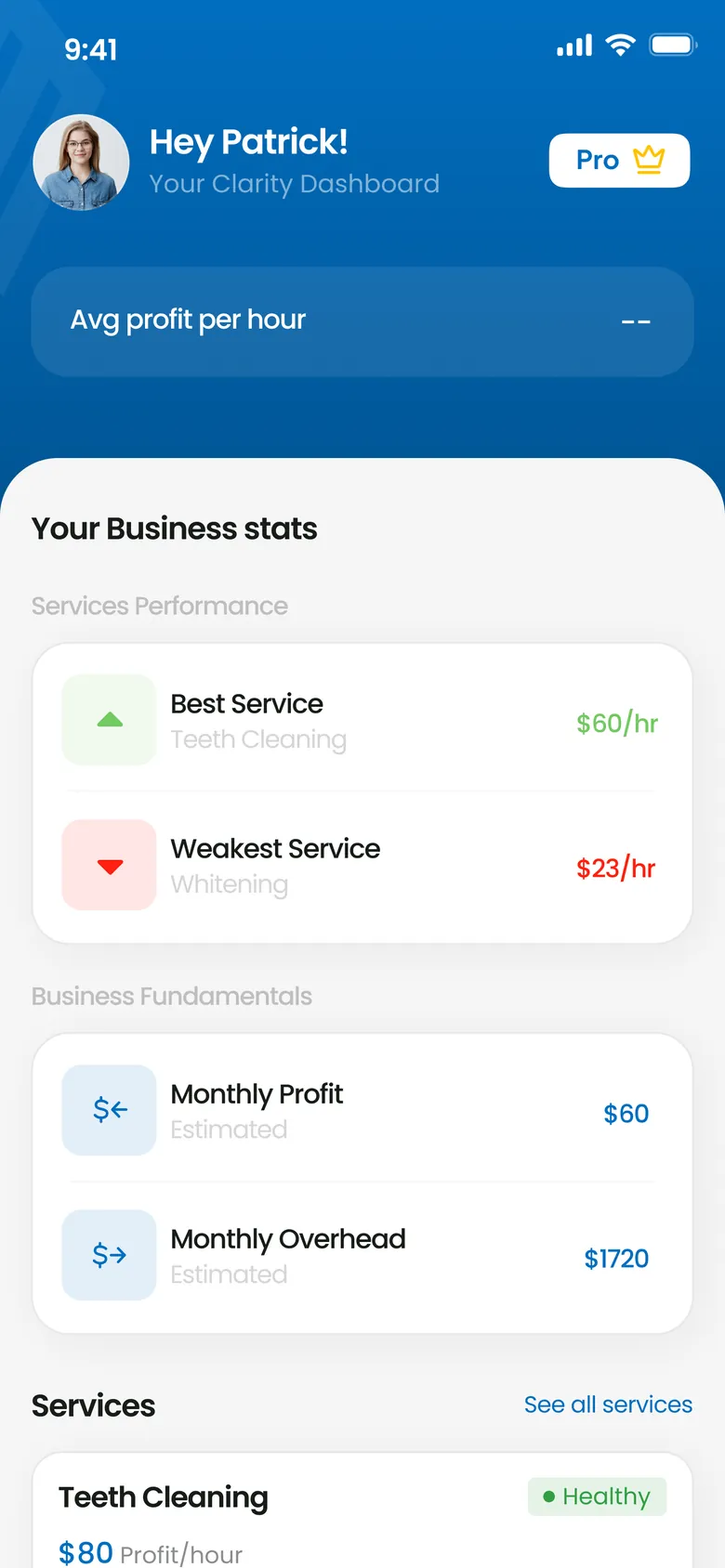
- For every service: the true cost, the margin, the profit per hour and the minimum safe price, with a health status at a glance.
- AI insights: a report per service covering pricing, labour, delegation, overhead and focus. The first report for each service is free; after that, each report is a single purchase.
Under the hood
An Expo and React Native app with Expo Router, TanStack Query for server data, Zustand for app state and MMKV for fast storage on the device. Sign-in runs on Clerk. The API is NestJS on PostgreSQL through Prisma. AI reports run as jobs on BullMQ, through a LangGraph pipeline over OpenAI, with progress pushed to the app over Socket.IO. Purchases run on RevenueCat, the backend on Railway and the app builds on EAS.
Decisions
The server owns every number. The app never works out a figure itself; it only shows what the API calculated and stored, so every screen and every AI report agrees. The cost: change one role's hourly rate, and every service that uses that role has to be recalculated, which we do inside one transaction.
AI reports are background jobs with live progress. A report takes about a minute. The server pushes each stage as it happens, and I made the app fill the gaps with estimated progress, so the screen never looks frozen. The cost: an estimate is a promise, and it has to stay close to the truth.
Purchases belong to the account. Payments only start after sign-in and are tied to that user, so a purchase follows them to a new phone. The server, not the app, decides what's unlocked.
The hard part
Paid, but still locked. When someone buys a report, the store tells the app "purchase complete" a few seconds before our server hears about it. In that gap, a person who had just paid could still see a locked report, which is the worst possible moment to look broken.
- Check, don't assume. After a purchase, the app asks the server a few times whether the report is unlocked, instead of trusting the store's answer alone.
- Remember the in-between. A short-lived "unlocking" note is saved on the phone, so leaving the screen and coming back still shows the purchase in progress, not a paywall.
- Clean hand-overs. The purchase identity resets on sign-out, so the next person to sign in on that phone never inherits someone else's purchase.
What it taught me: in payments, "paid" happens at a different moment for every party involved. Design the in-between state on purpose.
Another one, briefly. Getting reliable output from the AI was the backend's hard part. We started with a loop that checked the model's answer and asked again when it was wrong. We replaced it with five agents working in parallel, one per insight area, each held to a fixed output shape, and a report is only put together when all five are valid.
Outcome so far
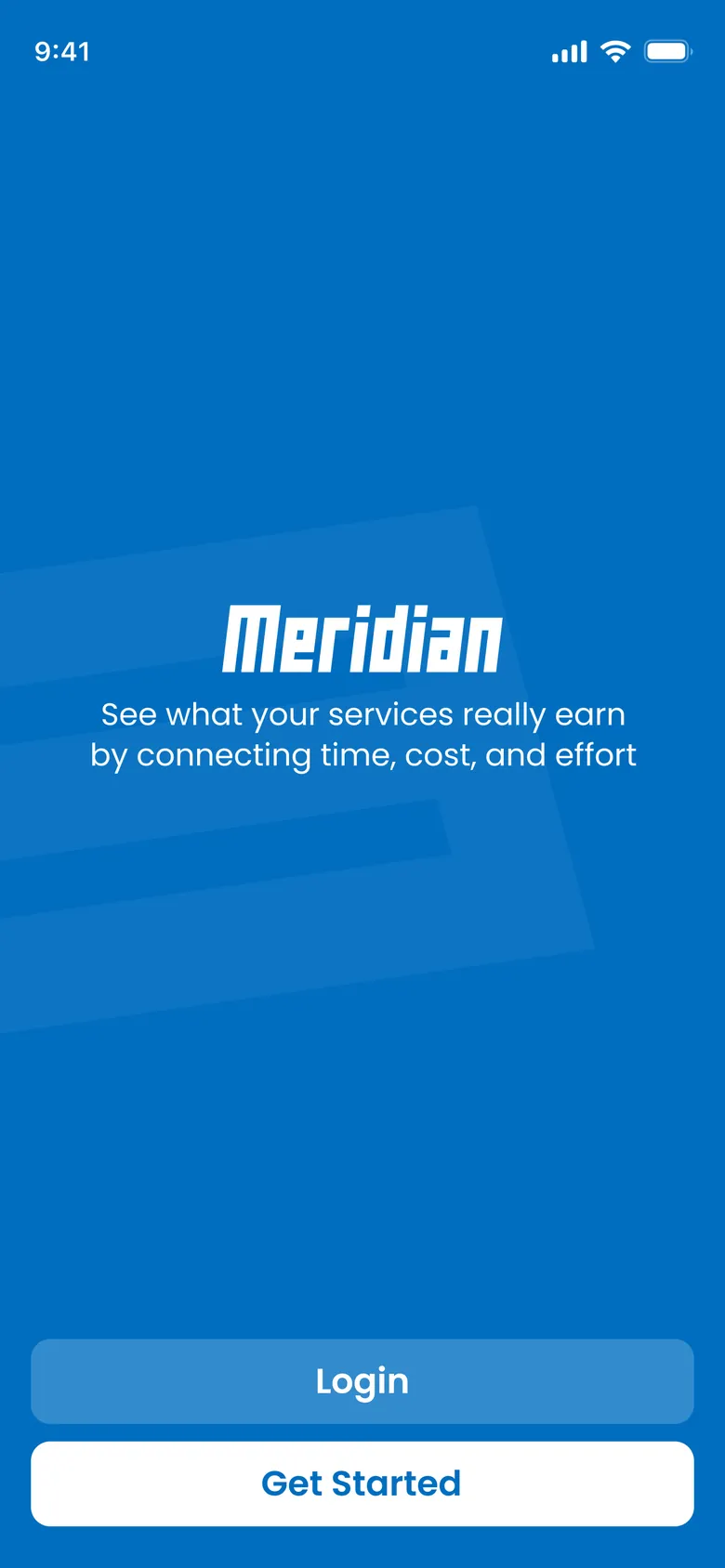
Meridian has been on the App Store and Google Play since May 2026, and we've since added voice onboarding, so owners can talk through their business instead of typing it in.
What I'd change: I'd set up tests and CI in the first week, not later.