


One of the most common Expo auth snippets still looks like this:
useEffect(() => {
  if (!isLoaded) return

  if (!session) {
    router.replace('/sign-in')
    return
  }

  if (!isOnboarded) {
    router.replace('/onboarding')
    return
  }

  router.replace('/home')
}, [isLoaded, session, isOnboarded])
It works… until it doesn't.
You end up juggling loading states, flashing wrong screens, and fighting root-layout timing bugs. Every OAuth flow in Expo hits this eventually.
Expo Router now has a better model.
The Mental Model That Scales
Stop thinking "where should I router.replace() next?"
Think in route groups:
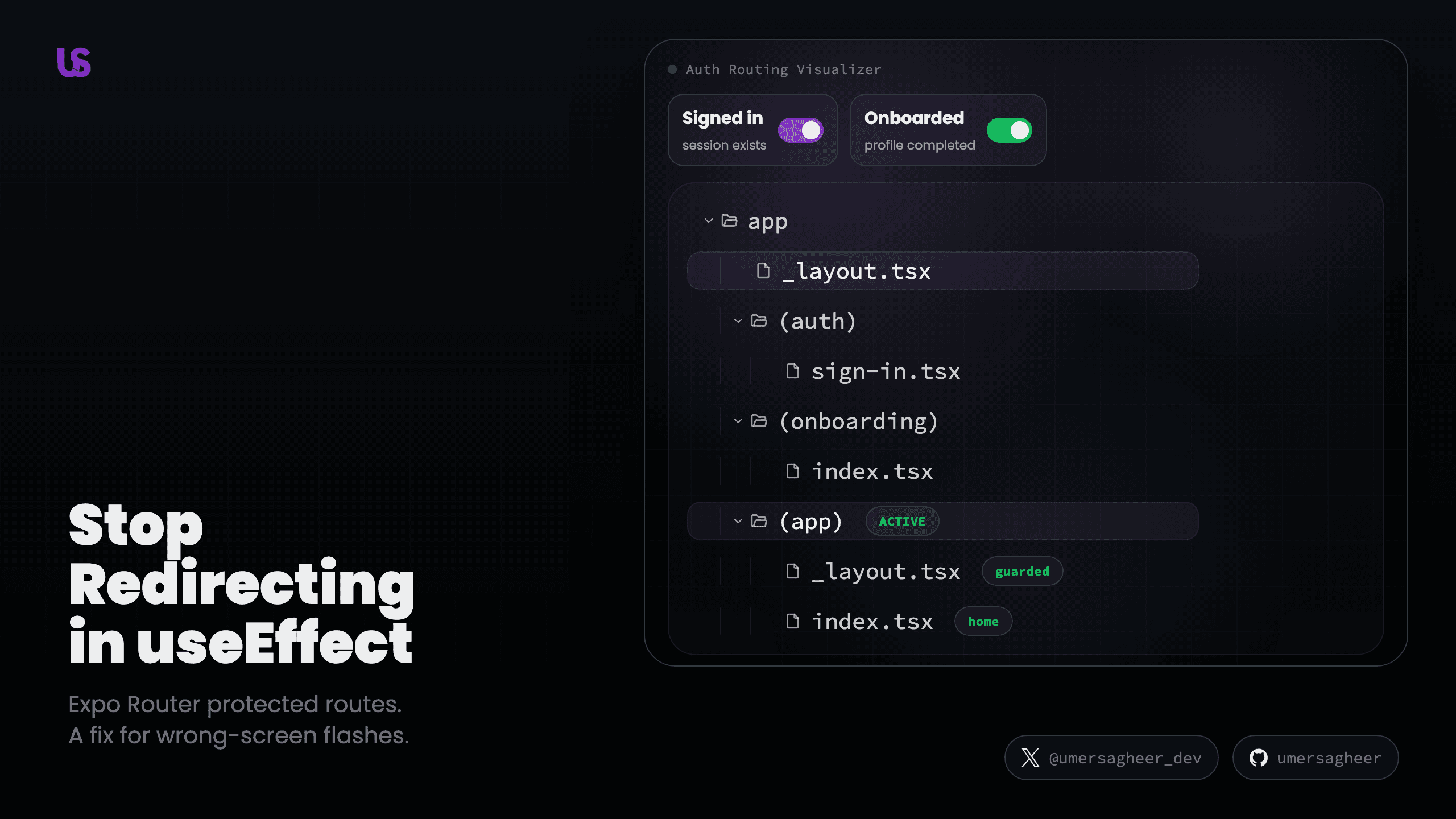
(auth)→ signed-out users(onboarding)→ signed-in but not yet set up(app)→ fully ready users
Auth routing becomes a question of which screens are allowed to exist right now. That's exactly what Stack.Protected does.
The Better Pattern
import { Stack } from 'expo-router'

function RootNavigator() {
  const { isLoaded, isSignedIn } = useAuth()
  const { data: userProfile, isLoading: isProfileLoading } =
    useUserProfile(!!isSignedIn)

  if (!isLoaded) return null

  if (isSignedIn && isProfileLoading) {
    return <FullScreenLoader />
  }

  const isOnboarded = !!userProfile?.businessProfile

  return (
    <Stack>
      <Stack.Protected guard={!isSignedIn}>
        <Stack.Screen name='(auth)' options={{ headerShown: false }} />
      </Stack.Protected>

      <Stack.Protected guard={!!isSignedIn && !isOnboarded}>
        <Stack.Screen name='(onboarding)' options={{ headerShown: false }} />
      </Stack.Protected>

      <Stack.Protected guard={!!isSignedIn && isOnboarded}>
        <Stack.Screen name='(app)' options={{ headerShown: false }} />
      </Stack.Protected>
    </Stack>
  )
}
The shift:
- Old
useEffectpattern: render first, navigate later Stack.Protectedpattern: declare which branch is valid right now
This is what the current Expo docs recommend for auth, onboarding, and role-based flows. Guards automatically redirect and clean up history.
Auth Routing Visualizer
Compare redirect-driven auth routing with guarded route groups, using the file-based mental model Expo Router actually gives you.
Signed in
Clerk/session exists
Onboarded
Profile completed
Why This Is Better Than Root-Level Redirects
Reaching for <Redirect> in the root layout sounds clean—until your decision depends on fetched auth and profile data. Then you hit the classic "navigation before mount" error.
The fix isn't a smarter useEffect.
The fix is to stop making auth navigation an imperative side effect.
Two Caveats Worth Keeping
- You still need a loading strategy while auth/profile state resolves (keep the splash screen or show a focused loader).
- Protected Routes are client-side only. They are not backend security. Your APIs still need real auth checks.
The Practical Takeaway
If your Expo app has auth, onboarding, or role-based entry flows, stop asking:
"Which screen should I redirect to in useEffect?"
Start asking:
"Which route group should be available right now?"
That single mindset shift makes the entire flow easier to reason about and maintain.